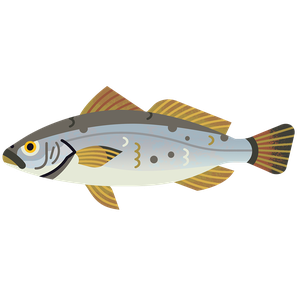
Basa
Pangasius bocourti & Pangasius hypophthalmus
What to check for
Location
Location
The location for farmed fish can refer to a region or country, or it can be global. We do not provide ratings at individual farm level. We rate farmed fish produced in a distinct area, using the same production method in the same environment. Sometimes, especially when looking at certified farmed fish, how they are produced and managed is the same the world over, so the rating applies globally.
Global: Global, All areas
Production method
Open net pen, freshwater
Open net pen means the fish are contained in a pen that is open to the surrounding water. The pens are constructed from a strong net suspended off either a plastic tube structure or a metal frame. The open nature of this production allows the surrounding water to flow through to bringing oxygen and dispersing waste.Open net pen, freshwater
Certification
Aquaculture Stewardship Council (ASC)
ASC was founded in 2010 as an outcome of the WWF Aquaculture Dialogues. ASC standards for farmed aquaculture sets Best Management Practices, which includes various requirements of operation procedures and production. These standards ensure operating facilities have good environmental performance, including requirements that support reduced habitat damage and impact to wild populations. The standard limits opportunities for benthic destruction, ensures that traceable feed ingredients are used, lowers disease risk and the consequential dependence on chemical treatments with the application of multiple management plans.
Aquaculture Stewardship Council (ASC)
Rating summary
The ASC standard certification addresses a number of issues of environmental concern in pangasius farming, the auditing of which requires farm inspections and standard enforcement. In general there are a number of issues of potential environmental impact associated with production, these include: habitat alteration; nutrient and organic pollution; escapes; interactions with local wildlife and enforcement of regulations. The ASC standard has criteria in place for animal welfare, but not for humane slaughter. Pangasius is an omnivore and as such is not heavily reliant on marine proteins and oils to form part of its diet, and the wild caught fish used to produce the feed is responsibly sourced. However, the source of vegetable ingredients is unknown. It is only by sourcing certified pangasius that you can be assured that the issues of critical environmental concern are being addressed.
This rating is based on full compliance with certification requirements. Commercial buyers should therefore ensure that full compliance has been achieved in order for this rating to be applicable.
Rating last updated December 2024.
How we worked out this Rating
Feed
What feed is given to farmed fish, where it comes from and how much is used is one of the most important aspects of fish farming. In this section we look at how sustainable the feed is and how much fish is included in the diet.
Farmed Pangasius depend on feed inputs, and in countries like Vietnam, the use of commercial Pangasius aquafeed is standard practice. ASC standard is working to improve the responsible sourcing of feed ingredients, with the upcoming feed mill standard. Pangasius are net producers of protein.
At present the responsible sourcing of soy and other vegetable proteins is not covered in the ASC pangasius standard. The responsible sourcing of fishmeal also needs improvement. However, in 2025 the ASC Feed Mill standard will be compulsory and sourcing requirements will improve.
Environment
The environmental impacts of aquaculture depend on what fish is farmed, how and where. It could be habitat damage, chemical use, pollution, freshwater use or parasites. In this section we look at the environmental impacts of greatest concern for that species and production method. Some species, such as shellfish, have very little impact, whilst others may give us cause for concern.
Pangasius farming in Vietnam can have significant environmental impacts. The ASC standard has criteria in place to reduce and mitigate many of these.
Pangasius aquaculture in Vietnam can have large environmental impact. Habitat alteration has taken place, but this is not in areas of high ecological sensitivity and has generally occurred through the conversion of intensive cropland, such as rice paddies or orchards, into ponds.
There has also been a general decline in freshwater supplies in the Mekong Delta due to a combination of rising sea levels and abstraction of freshwater for both agriculture and aquaculture, including through pangasius cultivation.
Juvenile pangasius are entirely hatchery based and no cleaner fish are used.
In pangasius aquaculture, escapes can occur, however, data is lacking and the primary prevention method for interactions with wild populations is to reduce the genetic performance of farmed fish in the wild, which is reported to be effective.
Data on predation rates and industry losses due to predation are currently not available for pangasius farming in the Mekong Delta, however, the ASC standard prevents lethal control.
Pangasius are subject to a range of diseases including parasites. The impact of parasite transfer to wild populations is unknown and there is little data available. It has been suggested that where wild fish occur in low densities, it will be difficult for parasitic populations to persist.
Pathogenic disease outbreaks also occur and it is unclear if these threaten regional level operations due to data deficiencies. All ASC certified farms are required to have a veterinary health plan.
Fish health and welfare
Fish health and welfare is a concern for many consumers. High welfare standards are an indication of good farm management, we look to see if there are industry wide welfare standards in place, and if these include humane slaughter.
There are provisions in place for animal welfare within the ASC standard, but not for humane slaughter.
There are criteria in place to ensure animal welfare, such as a minimum average growth rate and a maximum fish density at any time for ponds, pens and cages. However, there is no criteria in place for humane slaughter.
Management
How aquaculture is regulated and how effective those regulations are is an important aspect of farmed fish production. We also look to see if aquaculture is included in broader environmental management plans. In this management section we also award scores for globally recognised certification standards, as certified seafood requires verification of environmental performance and traceability.
ASC standard for certified pangasius has criteria or country level regulations in place to address management of the sector.
This assessment covers all ASC certified pangasius production in Vietnam. Marine Spatial Planning (MSP) in Vietnam is also underway in 8 coastal provinces in Vietnam and was incorporated in Vietnam’s Law of Planning in January 2018, this is still being developed.
In Vietnam, in addition to the criteria within the ASC Pangasius standard, there are also regulations in place that cover Environmental Impact Assessment (EIA), identification and protection of valuable habitats and species, use of land and water resources, use of chemicals including licensing, discharges including effluents and their impacts, biosecurity and disease management, and species introduction.
References
ASC. Aquaculture Stewardship Council. Available at https://www.asc-aqua.org [Accessed on 18.08.2024].
ASC, 2023. ASC Feed Standard Version 1.01. Jan 2023. Available at https://asc-aqua.org/wp-content/uploads/2023/04/ASC-Feed-Standard_v1.01.pdf [Accessed on 18.08.2024].
ASC, 2016. Interim Feed Solution. Available at https://www.asc-aqua.org/wp-content/uploads/2017/07/ASC-Feed-Interim-solution-Marine-Ingredients_FINAL_20161213.pdf [Accessed on 18.08.2021].
ASC, 2019. ASC Pangasius Standard Version 1.2 - June 2019. Available at https://asc-aqua.org/wp-content/uploads/2019/09/ASC-Pangasius-Standard_v1.2_Final.pdf [Accessed on 18.08.2024].
CBI, 2021. Entering the European market for pangasius. Available at https://www.cbi.eu/market-information/fish-seafood/pangasius/europe [Accessed on 28.03.2024].
De Silva, S. S. and Phuong, N. T., 2011. Striped catfish farming in the Mekong Delta, Vietnam: a tumultuous path to a global success. Reviews in Aquaculture. 3, pp. 45-73. Available at: https://doi.org/10.1111/j.1753-5131.2011.01046.x [Accessed on 02.04.2024].
Dung, T. T., Ngoc, N. T. N., Thinh, N.Q., Thy, D. T. M., Tuan, N. A., Shinn, A. and Crumlish, M., 2008. Common diseases of Pangasius catfish farmed in Viet Nam. Global Aquaculture Advocate, 11:77-78. Available at: https://www.globalseafood.org/advocate/common-diseases-of-pangasius-catfish-farmed-in-vietnam/ [Accessed on 09.04.2024].
FAO, 2024. National Aquaculture Legislation Overview: Vietnam. Text by Murekezi, P.. In: Fisheries and Aquaculture. Rome. Available at: https://www.fao.org/fishery/en/legalframework/vn/en [Accessed on 09.04.2024].
FAO, 2022. The National Aquaculture development program for the period of 2021 -2030. Hanoi, August 16, 2022. Available at: https://faolex.fao.org/docs/pdf/vie211903.pdf [Accessed on 09.04.2024].
Kurath, G. and Winton, J., 2011. Complex dynamics at the interface between wild and domestic viruses of finfish. Current Opinions in Virology, 1:73-80. Available at: https://doi.org/10.1016/j.coviro.2011.05.010 [Accessed on 09.04.2024].
Monterey Bay Aquarium Seafood Watch, 2021. Pangasius. Vietnam. Production System – Ponds. Available at https://www.seafoodwatch.org/globalassets/sfw-data-blocks/reports/c/mba_seafoodwatch_catfish_vietnam_report.pdf [Accessed on 02.04.2024].
Nguyen, T. A. T. and Jolly, C. M., 2020. Global value chain and food safety and quality standards of Vietnam pangasius exports. Aquaculture reports 16(100256). Available at https://doi.org/10.1016/j.aqrep.2019.100256 [Accessed on 09.04.2024].
Quyen, N. T. K., Hien, H. V., Khoi, L. N. D., Yogi, N. and Riple, A. K. L., 2020. Quality Management Practices of Intensive Whiteleg Shrimp (Litopenaeus vannamei) Farming: A Study of the Mekong Delta, Vietnam. Sustainability. Available at: https://doi.org/10.3390/su12114520 [Accessed on 02.04.2024].
Seafish, 2024. Pangasius – Pangasianodon hypophthalmus . Available at: https://www.seafish.org/responsible-sourcing/aquaculture-farming-seafood/species-farmed-in-aquaculture/aquaculture-profiles/pangasius/escapes-and-introductions/ [Accessed on 28.03.2024].
Subodh Pokhrel, Dang Thi Hoang Oanh, 2021. Investigation on common diseases of striped catfish (Pangasianodon hypophthalmus) farms in An Giang province and Can Tho City of the Mekong Delta Vietnam. Int J Fish Aquat Stud. 9(3):110-116. Available at: https://doi.org/10.22271/fish.2021.v9.i3b.2492 Accessed on [09.04.2024].
Tran Duc, T., Dang Hoai, N., Nguyen Van, T., Cao Thi, T. T., Vu Duy, V., Duong Thanh, N., Nguyen Dang, N., & Nguyen Thi, K. A., 2023. The process of establishing marine spatial planning maps in Vietnam. Vietnam Journal of Marine Science and Technology, 23(1), 1–18. Available at: https://doi.org/10.15625/1859-3097/18263 [Accessed on 09.04.2024].
Sustainable swaps
Learn more about how we calculate our sustainability ratings.
How our ratings work
Add impact to your inbox
Join the movement: get updates on the issues you care about.
We'll email you inspiring stories about the work we're doing to save and recover our oceans, and news about our urgent campaigns for positive change.