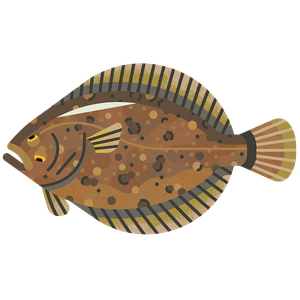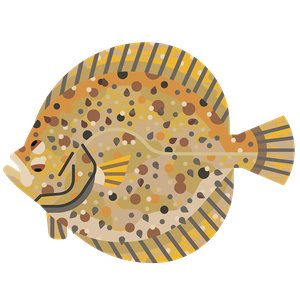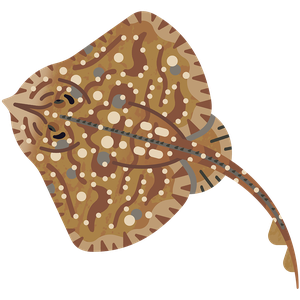
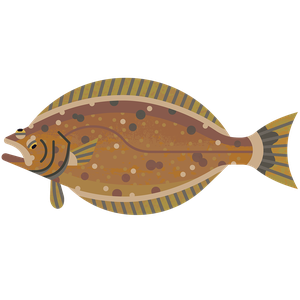
Plaice
Pleuronectes platessa
What to check for
Location
Location
Location refers to two things:
- Where the fish population or stock lives, e.g., North Sea, or South Pacific.
- Who is managing the fishery. If it says “All areas”, this means that our scoring for management covers the same area as the fish stock.
English Channel (East): All areas
Technical location
Technical location
A global system is used to split the ocean into different zones, areas, and subdivisions. Each zone is indicated by a number and/or letter. By law, this must be shown on all unprocessed seafood sold in the EU and UK, alongside the fishing method used to catch it. Look for these details on the packet to match your seafood to our ratings.
7d: English Channel (East)
Caught by
Caught by
Bottom trawl (otter)
Otter trawling involves towing a net over the seabed. The net is held open by two panels, known as otter boards. Fish are herded between the boards and into the net, which is then hauled onto the boat.
Bottom trawl (otter)
Rating summary
Default red rating: The Eastern English Channel plaice stock is below safe biological limits. Therefore, it receives a critical fail for stock status and is a default red rating.
Last updated: July 2025
How we worked out this Rating
Stock status
The size and health of a fish population, or 'stock', that is being targeted by fishermen is a crucial indicator of whether a fishery is sustainable. If the stock is too small to withstand fishing, it is at risk of crashing. We look at how big the stock is, and how much pressure there is from fishing, to assess this. The target level that many fisheries aim for is 'Maximum Sustainable Yield' - the most fish that can be caught year after year whilst keeping the population at a healthy size.
The Eastern English Channel plaice stock is below critical levels and being fished beyond safe fishing limits. Therefore, it receives a critical fail for stock status and is a default red rating.
Stock assessments for plaice in the Eastern English Channel are carried out annually by the International Council for the Exploration of the Sea (ICES). Following a benchmark assessment in 2025, an enhanced model was introduced using updated reference points, including catches, maturity, and natural mortality, which has shifted the understanding of the stock’s exploitation status.
The stock assessment defines reference points for fishing pressure (F) and biomass (B). For fishing pressure, there is a target to keep F at or below Maximum Sustainable Yield (MSY). For biomass, there is no target. However, there is a trigger point (MSY Btrigger). Below this level, F should be reduced to allow the stock to increase. Because BMSY is not defined, the Good Fish Guide applies its own definition of 1.4 x MSY Btrigger.
From 1988 to 2009, spawning stock biomass (SSB) remained below the limit reference point (Blim = 25,105 tonnes). Following a period of high recruitment between 2009 and 2015, SSB rose above MSY Btrigger (34,942 tonnes) in 2011 and peaked at 60,802 tonnes in 2015. However, since then, SSB has steadily declined, dropping below MSY Btrigger in 2021 and falling beneath Blim once again in 2024. In 2025, SSB remains below Blim at 22,798 tonnes, with projections indicating it will stay low in 2026 at 23,993 tonnes.
Historically, fishing pressure (F) exceeded the precautionary reference point (Fpa, 0.246), with some decline in the 1990s. F briefly dropped below FMSY (0.203) in 2014 but then increased again, surpassing Fpa in 2016. Since then, F has remained above both FMSY and Fpa, and was 0.308 in 2024.
ICES advises that when the MSY approach is applied, catches in 2026 should be no more than 1,151 tonnes. This is a 56% reduction from 2025 advice, reflecting the downward revision of SSB following the 2025 benchmark.
Management
Good management is vital to be sure that fishing doesn't cause fish populations to decline. We look at whether regulations follow the best available scientific advice, how well compliance is monitored and enforced, and whether this is effective in maintaining healthy fish stocks.
This fishery has a default red rating due to biomass concerns.
Management of this stock is mainly by Total Allowable Catch (TAC). Until 2023, there was a combined TAC in place for divisions 7.d and 7.e, which hampered effective management of plaice in the English Channel. This stock (7.d) is the larger of the two plaice stocks. In 2025, plaice in 7.d. has a TAC of 3113 tonnes, this is equal to the scientific advice for 2025 of ≤ 3113 tonnes.
In this area, there is a mixed fishery for sole and plaice and the two stocks are dominant commercially caught species. There can be contrasting changes in catch advice which can lead to higher discards of plaice. In 7d, the discard rate for plaice has increased from 18.4% to 73% between 2006 and 2024.
Technical measures in place for this fishery are:
- Minimum Conservation reference Size (MCRS): 270 mm
- Otter Trawls: minimum 80mm codend with 80mm square mesh
- Beam Trawls: minimum 80mm codend.
- Survival exemptions to Landing Obligation (LO)
The EU and UK both have fishery management measures, which can include catch limits, population targets, and gear restrictions. However, compliance in the EU and UK has been inconsistent, with ongoing challenges in implementing some regulations. The goal of reaching Maximum Sustainable Yield (MSY) by 2020 was missed, with less than half of UK TACs in 2024 following ICES advice. In 2024, the EU and UK reaffirmed their commitment to sustainable fisheries by aligning management with scientific advice to gradually approach MSY. However, no new target date has been set for achieving MSY across all fisheries. The Landing Obligation (LO), an EU law retained by the UK post-Brexit, requires all quota fish to be landed, even if unwanted (over-quota or below minimum size). It aims to encourage more selective fishing methods, reduce bycatch, and improve catch reporting. However, compliance is poor, and accurate discard levels are hard to quantify with current monitoring programmes. The UK is in the process of replacing the LO with country-specific Catching Policies.
The Marine Conservation Society views Remote Electronic Monitoring (REM) with cameras is one of the most cost-effective tools for providing reliable fisheries data and aiding informed management decisions. Fully monitored fisheries enhance collaboration, data accuracy, stock recovery, and reduce impacts on marine wildlife and habitats. However, the full potential of REM may only be achieved when it tracks fishing location and documents catch and bycatch, particularly where vulnerable species and habitats are at risk. As of January 2024, the EU is introducing a Remote Electronic Monitoring (REM) mandate for EU vessels, including CCTV cameras on vessels 18m or more that pose a potential risk of non-compliance, within the next 4 years. Across the UK, different approaches to REM are being taken and legislation is expected to be in place across all 4 countries within the next few years.
The Fisheries Act (2020) requires the development of Fisheries Management Plans (FMPs) (replacing EU Multi-Annual Plans) in the UK. 43 FMPs have been proposed and are at various stages of development and implementation, these should all be published by the end of 2028. FMPs have the potential to be very important tools for managing UK fisheries, although data limitations may delay them for some stocks. It is also essential the UK governments define and adopt a standardised approach or model across the four nations to a universally defined FMP design, to ensure the consistence, quality and coherence of all the proposal FMPs.
The Marine Conservation Society is keen to see publicly available Fishery Management Plans for all commercially exploited stocks, especially where stocks are depleted, that include:
- An overview of the fishery including current stock status, spatial coverage, current fishing methods and impacts
- Targets for fishing pressure and biomass, and additional management when those targets are not being met, based on the best scientific evidence
- Timeframes for stock recovery
- Improved data collection, transparency, and accountability, supported by technologies such as Remote Electronic Monitoring (REM)
- Consideration of wider environmental impacts of the fishery, including habitat impacts and minimising bycatch
- Stakeholder engagement
Plaice is included in the Celtic Sea and Western Channel demersal FMP, coordinated by Defra. At the time of writing, it is too soon to know whether proposed management measures will be effective in managing the stock. For more information about this FMP and expected progress and timelines, see [https://www.gov.uk/government/publications/joint-fisheries-statement-jfs/list-of-fisheries-management-plans].
Capture method
Environmental impacts of fishing vary hugely, depending on the method used and where it's happening. We look at whether the fishing gear being used could have an effect on seabed habitats, and if so, how severe might this be. We also review whether it catches any other species by accident (bycatch), and what effect this might have on those species - especially if they're Endangered, Threatened, or Protected.
This fishery has a default red rating due to biomass concerns.
In 2024, 63% of the landings were taken by beam trawls, 23% by otter trawls, and 14% by other gear types. Of a total catch of 3019 tonnes, 2265 tonnes were discarded (75%).
Plaice is mainly caught as bycatch in the sole fishery, which uses an 80mm mesh in otter trawls. This leads to a large number of plaice being discarded because this mesh size is not matched to the minimum conservation reference size (MCRS) of 27cm. The approximate size at which 50% of females mature or first spawn is around 30-34cm.
Demersal otter trawls have the potential to take relatively high quantities of bycatch. In the Northeast Atlantic there are reported catches of demersal elasmobranchs and endangered, threatened and protected (ETP) species (e.g. sharks, rays and marine mammals). Bycatch data is limited in many UK and EU fisheries as they are generally not well monitored.
Demersal trawls have contact with the seabed resulting in penetration and abrasion of habitat features. The impact of trawling on the seabed depends on the location and scale in which trawling occurs. For example, areas that are used to natural disturbance through tides and waves, are less sensitive to habitat impacts. Areas not used to mobile towed gears are typically more sensitive to trawling. Trawl gears are known to have some of the greatest impacts on Vulnerable Marine Ecosystems (VMEs).
In the North Sea area, impacts from bottom trawling are variable. Fishing grounds vary, but the habitat is generally mud and sand, which are less vulnerable to trawling than features such as reefs and seagrass. Data from 2024 indicates an estimated 70% of the 0-200m zone, and 27% of the 200-800m zone, has been at least partially trawled. Average fishing mortality in the areas has reduced since the late 1990s for pelagic, demersal, and shellfish stocks. However, fishing in the North Sea in general has reduced the number of large fish in the ecosystem (mostly cod, saithe, ling, sturgeon, and some elasmobranchs). There are concerns about the impact of North Sea trawling on sea pens.
There are Marine Protected Areas (MPAs) in this area, some of which are designated to protect seabed features from damaging activities. This fishery overlaps with parts of these MPAs, but the proportion of the catch coming from these areas is expected to be relatively low in relation to the unit of assessment (i.e. less than 20% of the catch or effort), and so these impacts have not been assessed within the scale of this rating. Given the important role that MPAs have in recovering the health and function of our seas, MCS encourages the supply chain to identify if their specific sources are being caught from within MPAs. If sources are suspected of coming from within designated and managed MPAs, MCS advises businesses to establish if the fishing activity is operating legally inside a designated and managed MPA, and request evidence from the fishery or managing authority to demonstrate that the activity is not damaging to protected features or a threat to the conservation objectives of the site(s).
To improve monitoring and reporting of fishing activity, MCS would like to see remote electronic monitoring (REM) with cameras implemented, used and enforced.
References
Eigaard, O.R., Bastardie, F., Breen, M., Dinesen, G.E., Hintzen, N.T., Laffargue, P., Mortensen, L.O., Nielsen, J.R., Nilsson, H.C., O'Neill, F.G., Polet, H., Reid, D.G., Sala, A., SkOld, M., Smith, C., Sorensen, T.K., Tully, O., Zengin, M., Rijnsdorp, A.D., 2016. Estimating seabed pressure from demersal trawls, seines, and dredges based on gear design and dimensions. ICES Journal of Marine Science, Volume 73, Issue suppl 1. Pages i27-i43. Available at https://academic.oup.com/icesjms/article/73/suppl_1/i27/2573989 [Accessed on 03.07.2025].
Ellis, J. R., Bendall, V. A., Hetherington, S. J., Silva, J. F. and McCully Phillips, S. R. 2016. National Evaluation of Populations of Threatened and Uncertain Elasmobranchs (NEPTUNE). Project Report (Cefas) V1.4. Available at http://randd.defra.gov.uk/Document.aspx?Document=13513_MB5201NEPTUNEFinalReportv1.4.pdf [Accessed on 12.07.2024].
EU. 2024. Council Regulation (EU) 2024/257 of 11 January 2024 fixing for 2024, 2025 and 2026 the
fishing opportunities for certain fish stocks, applicable in Union waters and, for Union
fishing vessels, in certain non-Union waters, and amending Regulation (EU) 2023/194.
ST/16570/2023/ADD/3/REV/1. Official Journal of the European Union, L 2024/257,
11.1.2024, p. 1–219. http://data.europa.eu/eli/reg/2024/257/oj
EU. 2019. Regulation (EU) 2019/1241 of the European Parliament and of the Council of 20 June
2019 on the conservation of fisheries resources and the protection of marine ecosystems
through technical measures, amending Council Regulations (EC) No 1967/2006, (EC) No
1224/2009 and Regulations (EU) No 1380/2013, (EU) 2016/1139, (EU) 2018/973, (EU)
2019/472 and (EU) 2019/1022 of the European Parliament and of the Council, and repealing
Council Regulations (EC) No 894/97, (EC) No 850/98, (EC) No 2549/2000, (EC) No 254/2002,
(EC) No 812/2004 and (EC) No 2187/2005. Official Journal of the European Union, L 198,
25.7.2019, p. 105. http://data.europa.eu/eli/reg/2019/1241/2024-04-09
GOV.UK. 2025. Technical Conservation and Landing Obligation rules and regulations 2025. Available at: https://www.gov.uk/guidance/technical-conservation-and-landing-obligation-rules-and-regulations-2025 [Accessed on 03.07.2025]
Hiddink, J., Jennings, S., Sciberras, M., Szostek, C.L., Hughes, K.M., Ellis, N., Rijnsdorp, A.D., McConnaughey, R.A., Mazor, T., Hilborn, R., Collie, J.S., Pitcher, C.R., Amoroso, R.O., Parma, A.M., Suuronen, P. and Kaiser, M.J. 2017. Global analysis of depletion and recovery of seabed biota after bottom trawling disturbance. PNAS. 114:31, pp. 8301-8306. https://doi.org/10.1073/pnas.1618858114.
ICES. 2025. Plaice (Pleuronectes platessa) in Division 7.d (eastern English Channel). In Report of the ICES Advisory Committee, 2025. ICES Advice 2025, ple.27.7d. https://doi.org/10.17895/ices.advice.27202788
ICES. 2025. Benchmark Workshop on Selected North Sea and Celtic Sea Stocks (WKBNSCS).
ICES Scientific Reports. 07:42. 349 pp. https://doi.org/10.17895/ices.pub.28715180
ICES. 2025. Working Group on the Assessment of Demersal Stocks in the North Sea and Skagerrak (WGNSSK).
ICES Scientific Reports. 07:57. 1122 pp. https://doi.org/10.17895/ices.pub.29085995
ICES. 2024. Greater North Sea ecoregion – Ecosystem overview. In Report of the ICES Advisory Committee, 2024. ICES Advice 2024, Section 7.1, https://doi.org/10.17895/ices.advice.25714239
Kennelly, S. J. & Broadhurst, M. K., 2021. A review of bycatch reduction in demersal fish trawls. Rev Fish Biol Fisheries 31, 289–318. https://doi.org/10.1007/s11160-021-09644-0.
Kynoch, R., Fryer, R. & Neat, F., 2015. A simple technical measure to reduce bycatch and discard of skates and sharks in mixed-species bottom-trawl fisheries. ICES J Mar Sci,72(6):1861.
Silva, F., Ellis, J. & Catchpole, T., 2012. Species composition of skates (Rajidae) in commercial fisheries around the British Isles and their discarding patterns. J Fish Biol., 80:1678–1703.
van Denderen, P. Bolam, S., Hiddink, J.G., Jennings, S., Kenny, A., Rijnsdorp, A., and van Kooten, T., 2015. Similar effects of bottom trawling and natural disturbance on composition and function of benthic communities across habitats. Mar Ecol Prog Ser. 2015;541:31–43.
Sustainable swaps
Learn more about how we calculate our sustainability ratings.
How our ratings work
Add impact to your inbox
Join the movement: get updates on the issues you care about.
We'll email you inspiring stories about the work we're doing to save and recover our oceans, and news about our urgent campaigns for positive change.