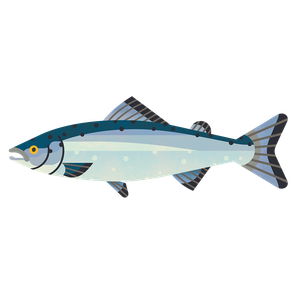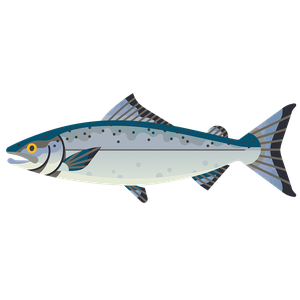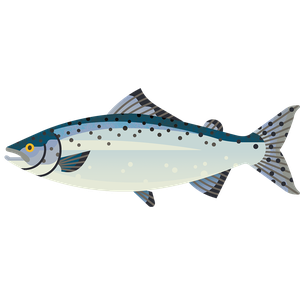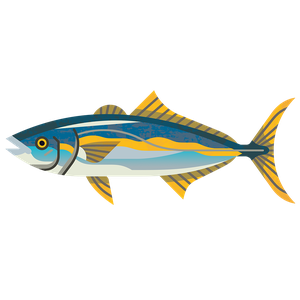
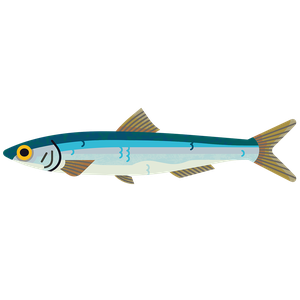
Horse mackerel
Trachurus trachurus
What to check for
Location
Location
Location refers to two things:
- Where the fish population or stock lives, e.g., North Sea, or South Pacific.
- Who is managing the fishery. If it says “All areas”, this means that our scoring for management covers the same area as the fish stock.
Norwegian Sea, North Sea (North), Celtic Seas, Cantabrian Sea, English Channel (South), Bay of Biscay. Western stock.: All areas
Technical location
Technical location
A global system is used to split the ocean into different zones, areas, and subdivisions. Each zone is indicated by a number and/or letter. By law, this must be shown on all unprocessed seafood sold in the EU and UK, alongside the fishing method used to catch it. Look for these details on the packet to match your seafood to our ratings.
8: Bay of Biscay, 7f: Bristol Channel, 7g: Celtic Sea (North), 7h: Celtic Sea (South), 7e: English Channel (West), 5b: Faroes Grounds, 7a: Irish Sea, 4a: North Sea (North), 2a: Norwegian Sea, 7c: Porcupine Bank, 7j: Southwest of Ireland (East), 7k: Southwest of Ireland (West), 7b: West of Ireland, 6a: West of Scotland
Caught by
Caught by
Net (pelagic trawl)
Pelagic trawling involves towing a net through mid-water or at the surface, usually without touching the seabed. It can be towed by one boat or a pair of boats. Shoals of fish are targeted using equipment such as sonar.
Net (pelagic trawl)
Rating summary
The Western horse mackerel population is critically depleted and is a Fish to Avoid.
Rating last updated November 2023.
How we worked out this Rating
Stock status
The size and health of a fish population, or 'stock', that is being targeted by fishermen is a crucial indicator of whether a fishery is sustainable. If the stock is too small to withstand fishing, it is at risk of crashing. We look at how big the stock is, and how much pressure there is from fishing, to assess this. The target level that many fisheries aim for is 'Maximum Sustainable Yield' - the most fish that can be caught year after year whilst keeping the population at a healthy size.
Critical fail: The horse mackerel population (or stock) in this region is depleted to such low levels that recruitment may be impaired, and without a recovery plan in place. Zero catch is advised but advice is not being followed.
The 2023 stock assessment shows the western horse mackerel population (or stock) to be at depleted levels', lower than the biomass limit (Blim) whereby recruitment may be impaired. The populations spawning stock biomass (707,811 tonnes, in 2023) has been below Blim (834,480 tonnes) for the last decade.
Fishing pressures have reduced, 0.075 in 2022, in recent years but remains just above FMSY of 0.074 (the maximum rate of fishing mortality, i.e. the proportion of a fish stock caught and removed by fishing, that can sustain a healthy population level). ICES advises that when the MSY approach and precautionary considerations are applied, there should be zero catch in 2024. The spawning stock is forecast to remain below Blim in 2025 even under a scenario of zero catch in 2024.
Horse mackerel in the Northeast Atlantic is separated into three stocks: North Sea, Southern, and Western.
Management
Good management is vital to be sure that fishing doesn't cause fish populations to decline. We look at whether regulations follow the best available scientific advice, how well compliance is monitored and enforced, and whether this is effective in maintaining healthy fish stocks.
This fishery has a default red rating due to biomass concerns.
Management of this fishery is ineffective, as the population level has dropped below the limit point whereby recruitment may be impaired and fishing pressure remaining too high. There is no specific management plan for horse mackerel in this area. A precautionary recovery plan is being developed for the fishery to help to rebuild the stocks, but this is yet to be implemented.
This fishery is currently managed by annual Total Allowable Catch (TAC) limits. TACs have been set in line with scientific advice since 2018. However, in 2023 zero catch was advised, the advice was not followed and a TAC was agreed. Compliance to the TAC is high, with total annual catches on average 94% of the TAC; 2018-2022. Historically, TACs have not limited catches and with significant reduction in the TAC and advice since 2020, it appears the have been low enough to limit catches.
The Marine Management Organisation (MMO) has a 15 cm minimum conservation reference size (MCRS) in place for horse mackerel caught in UK waters. This provides some protection to immature fish, however, length at fist maturity is on average 24.3 cm. Fish caught below this length would likely not have had the chance to reproduce.
Discarding in the target pelagic fisheries is considered minimal. The average discard rate over 2018–2022 is 3%.
A comprehensive genetic research project on stock identification of horse mackerel is currently being carried out. There are potential issues with stock boundaries for the species, and these are subject to ongoing investigation.
In the EU, compliance with regulations has been variable, and there are ongoing challenges with implementing some of them.
In the UK, it is too early to tell how effective management is, as the Fisheries Act only came into force in January 2021. The Act requires the development of Fisheries Management Plans (FMPs). FMPs are currently in development, but the scope of them remains unclear. They have the potential to be very important tools for managing UK fisheries, although data limitations may delay them for some stocks. MCS is keen to see publicly available FMPs for all commercially exploited stocks, especially where stocks are depleted, that include:
- Targets for fishing pressure and biomass, and additional management when those targets are not being met, based on the best available scientific evidence
- Timeframes for stock recovery
- Improved data collection, transparency and accountability, supported by technologies such as Remote Electronic Monitoring (REM)
- Consideration of wider environmental impacts of the fishery
Capture method
Environmental impacts of fishing vary hugely, depending on the method used and where it's happening. We look at whether the fishing gear being used could have an effect on seabed habitats, and if so, how severe might this be. We also review whether it catches any other species by accident (bycatch), and what effect this might have on those species - especially if they're Endangered, Threatened, or Protected.
This fishery has a default red rating due to biomass concerns.
Western horse mackerel is primarily targeted by pelagic trawlers. These trawlers do not touch the sea floor and tend have very little bycatch of other species, nonetheless, there are concerns over the level of bycatch of common dolphins in the Bay of Biscay and harbour porpoises in the Celtic Sea.
Horse mackerel is a marine mid-water (or pelagic) species. Adults form large schools in coastal areas with sandy substrate, often found in depths between 100-200 meters. In earlier years most horse mackerel catches were used for fish meal and oil while in recent years most of the catches have been used for human consumption.
In 2022, 42% of horse mackerel was caught by pelagic trawls. Other fishing methods (unspecified* (*most of those catches are taken by pelagic trawls) and other gears 37%; purse-seine 17%; otter trawl 4%) also contributed to catch, most of which landed horse mackerel as bycatch in non-directed fisheries.
Pelagic trawls are towed in mid-water with no intentional contact with the seabed, thus negligible impact on the seabed environment. Pelagic trawls are species specific in operation, but on occasion can bycatch marine mammals, other pelagic fish and surface-dwelling birds on hauling. Although very low bycatch is reported in the fishery overall there are serious concerns for common dolphins in the Bay of Biscay and Celtic Sea and harbour porpoises in the Celtic Sea, caught in gears including mid-water trawls. These catches occur at a scale that may exceed internationally adopted thresholds of acceptability. Several commercially exploited species are found alongside horse mackerel and may also be caught in the fishery.
Increased surveillance and testing of measures to minimise catches of dolphins and porpoises are underway, however, the measures used in the horse mackerel fishery are not known.
UK regulations to reduce the impacts of fishing on marine habitats and wider species are under development, in the meantime most EU regulation have been adopted. Under EU legislation, bycatch species should be managed within scientifically defined or, where data isn’t available, suitability precautionary sustainable exploration limits. If stocks fall below a certain threshold, measures can be brought in such as gear limitations (e.g., mesh size or depth of use), time and/or areas closures, and Minimum Conservation Reference Sizes (MCRS).
References
Abaunza, P., Gordo, L., Karlou-Riga, C. et al., (2003). Growth and reproduction of horse mackerel, Trachurus trachurus (carangidae). Reviews in Fish Biology and Fisheries, 13, pp.27–61. Available at https://core.ac.uk/download/pdf/34725233.pdf [Accessed 06.11.2023]
ASCOBANS. (2018). Update on the implementation of the EU nature, marine and fisheries policies relevant for ASCOBANS activities. Available at: https://www.ascobans.org/sites/default/files/document/AC24_Inf._8.a_Background%20document%20on%20relevant%20EU%20policy%20matters_0.pdf [Accessed on 13.11.23]
Beltran, J., Brunel, T., Campbell, A. et al., (2021). Workshop for the Review of the Assessment of a New Rebuilding Plan for Western Horse Mackerel (WKWHMRP). International Council for the Exploration of the Sea (ICES). ICES Scientific Report Vol. 3 No. 37 https://doi.org/10.17895/ices.pub.8023
Dars, C., Meheust, E., Genu, M. et al., (2021). Les echouages de mammiferes marins sur le littoral francais en 2021. Reseau National Echouages (RNE), Rapport annuel. Available at https://www.observatoire-pelagis.cnrs.fr/wp-content/uploads/2022/11/rapport_echouage_2021_20221125.pdf
Froese, R. and D. Pauly (editors) (2023). FishBase: Atlantic horse mackerel (Trachurus trachurus). Available at https://fishbase.mnhn.fr/summary/Trachurus-trachurus.html [Accessed 06.11.2023]
ICES (2018). Bycatch of small cetaceans and other marine animals – review of national reports under Council Regulation (EC) No. 812/2004 and other information. Available to download at https://www.ices.dk/advice/Pages/Latest-Advice.aspx [Downloaded 29.07.2020]
ICES (2020). EU request on emergency measures to prevent bycatch of common dolphin (Delphinus delphis) and Baltic Proper harbour porpoise (Phocoena phocoena) in the Northeast Atlantic. ICES Advice: Special Requests. Report. https://doi.org/10.17895/ices.advice.6023
ICES. (2021a). EU request to ICES on the assessment of a new rebuilding plan for western horse mackerel (Trachurus trachurus) in ICES Subarea 8 and divisions 2.a, 4.a, 5.b, 6.a, 7.a–c, and 7.e–k. In Report of the ICES Advisory Committee, 2021. ICES Advice 2021, sr.2021.04. https://doi.org/10.17895/ices.advice.8039
ICES. (2021b). Stock Annex: Horse mackerel (Trachurus trachurus) in Subarea 8 and divisions 2.a, 4.a, 5.b, 6.a, 7.a-c,e-k (the Northeast Atlantic). ICES Stock Annexes. Report. https://doi.org/10.17895/ices.pub.18622697.v1
ICES. (2022a). ICES Roadmap for bycatch advice on protected, endangered and threatened species (2022). ICES Technical Guidelines. Report. https://doi.org/10.17895/ices.advice.19657167.v3
ICES. (2022b). Working Group on Bycatch of Protected Species (WGBYC). ICES Scientific Reports. 3:107. 168 pp. https://doi.org/10.17895/ices.pub.9256
ICES. (2023a). Horse mackerel (Trachurus trachurus) in Subarea 8 and divisions 2.a, 4.a, 5.b, 6.a, 7.a–c, and 7.e–k (the Northeast Atlantic). In Report of the ICES Advisory Committee, 2022. ICES Advice 2023, hom.27.2a4a5b6a7a-ce-k8, https://doi.org/10.17895/ices.advice.21856521
ICES. (2023b). Working Group on Widely Distributed Stocks (WGWIDE). ICES Scientific Reports. 5:82. https://doi.org/10.17895/ices.pub.24025482
MCS (2023). MPA Reality Check. Available at https://mpa-reality-check.org/ [Accessed 07.11.2023]
MMO (2018). Statutory guidance: Minimum Conservation Reference Size (MCRS) in UK waters. Available at https://www.gov.uk/government/publications/minimum-conservation-reference-sizes-mcrs/minimum-conservation-reference-sizes-mcrs-in-uk-waters [Accessed 06.11.2023]
Peltier, H., Authier, M., Deaville, R., et al. (2016). Small cetacean bycatch as estimated from stranding schemes: The common dolphin case in the northeast Atlantic. Environmental Science and Policy, 63: 7-18. doi: 10.1016/j.envsci.2016.05.004. Available at https://www.sciencedirect.com/science/article/abs/pii/S1462901116301514 [Accessed 08.11.2023]
Seafish (2023). Pelagic Trawl. Available at: https://www.seafish.org/responsible-sourcing/fishing-gear-database/gear/pelagic-trawl/ [Accessed 07.11.2023]
Sustainable swaps
Learn more about how we calculate our sustainability ratings.
How our ratings work
Add impact to your inbox
Join the movement: get updates on the issues you care about.
We'll email you inspiring stories about the work we're doing to save and recover our oceans, and news about our urgent campaigns for positive change.