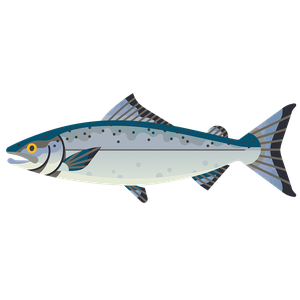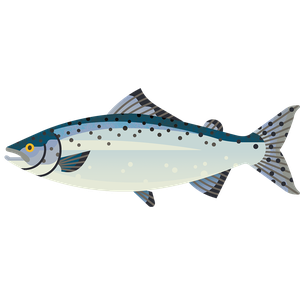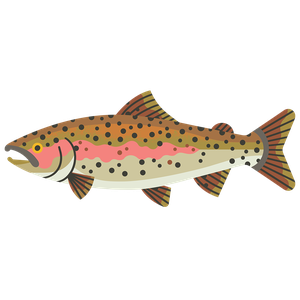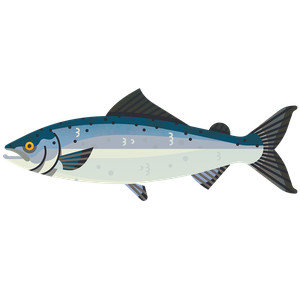
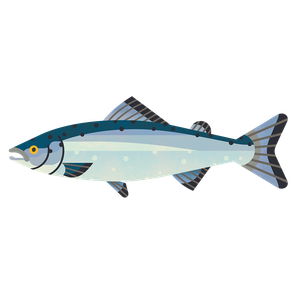
Arctic char
Salvelinus alpinus
What to check for
Location
Location
The location for farmed fish can refer to a region or country, or it can be global. We do not provide ratings at individual farm level. We rate farmed fish produced in a distinct area, using the same production method in the same environment. Sometimes, especially when looking at certified farmed fish, how they are produced and managed is the same the world over, so the rating applies globally.
Europe: UK, All areas
Production method
Tanks, flow through
Flow through tanks are located on land next to the sea. Sea water is pumped into the tanks via a filter, the water is then filtered again when it leaves the tank and is pumped back out to sea.Tanks, flow through
Rating summary
Land based farmed Arctic char is a good choice to make when looking for an oily fish. The use of land based production systems addresses many issues of environmental concern that can be associated with farmed fish production such as organic and chemical waste deposition, escapes and habitat impacts. Arctic char has a lower requirement for fish in its diet compared to other salmonid species and in UK production, and responsibly sourced feed is used. This assessment also scores well for welfare and management but would benefit from 3rd party certification.
Rating last updated May 2022.
How we worked out this Rating
Feed
What feed is given to farmed fish, where it comes from and how much is used is one of the most important aspects of fish farming. In this section we look at how sustainable the feed is and how much fish is included in the diet.
Arctic char feed is traceable and requirements are in place for responsible ingredient sourcing, however, it is a net consumer of protein.
Arctic char are fed on a commercial, pelleted feed that comprises fishmeal, fish oil and vegetable proteins and oils. The ingredients are thought to be traceable and the feed production company requires wild capture proteins and oils to come from certified sources (Marine Stewardship Council and MarinTrust). Although Arctic char are good feed convertors, they still require more wild fish protein than they produce, making them a net consumer of protein.
Any soy products used are also certified as responsible by Roundtable for Responsible Soy, ProTerra or International Sustainability and Carbon Certification.
Environment
The environmental impacts of aquaculture depend on what fish is farmed, how and where. It could be habitat damage, chemical use, pollution, freshwater use or parasites. In this section we look at the environmental impacts of greatest concern for that species and production method. Some species, such as shellfish, have very little impact, whilst others may give us cause for concern.
Arctic char farmed in flow-through tanks in the UK have little environmental impact.
Flow-through tanks filter the water before returning it to the source supply and therefore local freshwater supply is not depleted. Due to the nature of the tanks, there is also limited habitat alteration. Arctic char juveniles are hatchery based and as there are no adjacent wild populations of Arctic char and therefore, no spread of disease or parasites. Production has had no known escape events where escapees have survived in the wild.
Although chemicals may be used in production, these are thought to have little environmental impact and do not include the use of antibiotics. Consent is needed for the discharge of effluents and environmental impact assessment includes the monitoring of effluent loads in the environment.
Local legislation allows for the lethal control of predators in this area.
Fish health and welfare
Fish health and welfare is a concern for many consumers. High welfare standards are an indication of good farm management, we look to see if there are industry wide welfare standards in place, and if these include humane slaughter.
There are practices in place to ensure both fish welfare and humane slaughter.
Management
How aquaculture is regulated and how effective those regulations are is an important aspect of farmed fish production. We also look to see if aquaculture is included in broader environmental management plans. In this management section we also award scores for globally recognised certification standards, as certified seafood requires verification of environmental performance and traceability.
This assessment scores well for management measures but would benefit from 3rd party certification.
Aquaculture policy in the UK is a devolved matter, with the separate administrations of Wales, England, Northern Ireland and Scotland responsible for its collective oversight. Aquaculture in England is not yet included in the River Basin Management Plans (RBMPs) and MCS would like to see this included in the next RBMPs (produced every 7 years).
In the UK, there is regulatory framework in place to address the environmental impacts of aquaculture. This includes the Habitats Directive 92/43/EEC and the Birds Directive 2009/147/EC, which form the cornerstones of the EU’s nature conservation policy and protect valuable habitats and species. There is also regulation in place to cover the use of land and water resources, discharges including effluents and their impacts, biosecurity and disease management. These regulations are thought to be fully effective.
Arctic char in the UK are not farmed to 3rd party certifications standards.
References
Aller Aqua. Quality assurance. Available at https://www.aller-aqua.com/sustainability/commitment/quality [Accessed on 18.02.2022].
Dorset Local Enterprise Partnership. High Potential Opportunity Sustainable Aquaculture: Developing and deploying technologies in Dorset. Available at https://www.dorsetlep.co.uk/userfiles/files/IID/Brochures/HPO%20Aquaculture%20Proposition%20FINAL%20Dec%202020.pdf [Accessed on 18.02.2022].
FAO. Aquaculture Feed and Fertiliser Resources Information System. Rainbow Trout Frequently Asked Questions (FAQs). Available at https://www.fao.org/fishery/affris/species-profiles/rainbow-trout/faqs/en/ [Accessed on 01/03/2022].
GLOBALG.A.P. 2019. Integrated Farm Assurance – Aquaculture Module. Control Points and Compliance Criteria. Available at https://www.globalgap.org/uk_en/for-producers/globalg.a.p./integrated-farm-assurance-ifa/aquaculture/ [Accessed on 01.03.2022].
M&J. Arctic char. Available at https://www.mjseafood.com/the-fish-book/7/arctic-char [Accessed on 18.02.2022].
The Wild Trout Trust. Artic charr. Available at https://www.wildtrout.org/content/arctic-charr [Accessed on 01.03.2022].
Weyfish Dorset Seafood. Available at https://shop.weyfish.com/arctic-char [Accessed on 18.02.2022].
Sustainable swaps
Learn more about how we calculate our sustainability ratings.
How our ratings work
Add impact to your inbox
Join the movement: get updates on the issues you care about.
We'll email you inspiring stories about the work we're doing to save and recover our oceans, and news about our urgent campaigns for positive change.