
Cushion star
Asterina gibbosa
IUCN Status:Not Evaluated
One of the cutest starfish with a sweet name to boot, it ambles around shallow shores grazing on algae and detritus, making it one of the friendliest‑looking UK sea stars you’re likely to spot.
What do they look like?
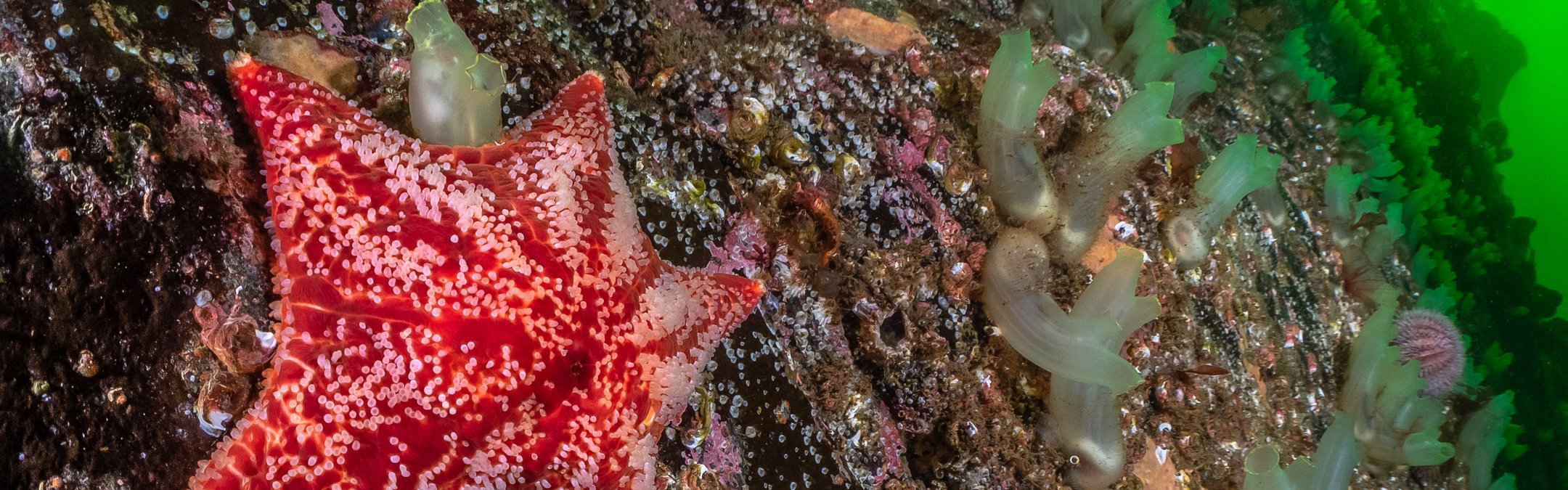
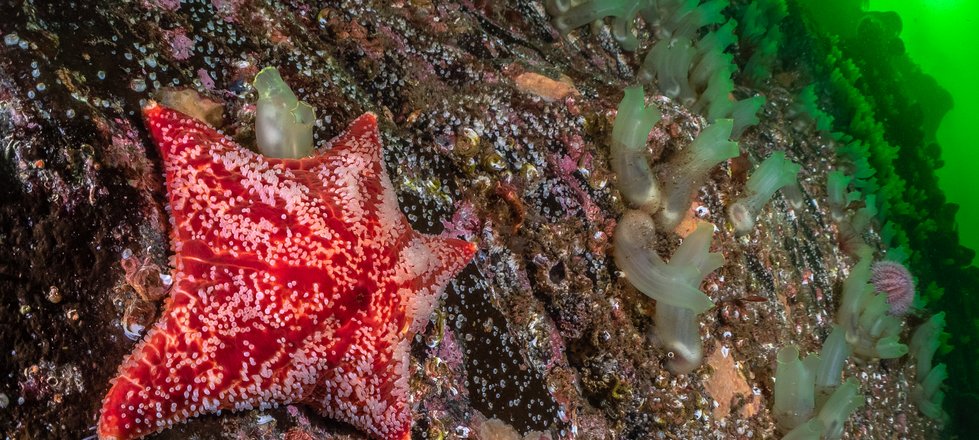
The cushion star is a small, chunky sea star with a rounded, bumpy body that looks a bit like a colourful pebble tucked into the rocks. This small, thick starfish has five short arms and looks like a cushion, hence the name! While their colour varies, they are usually pale orange, brown, green or cream.
Where can they be found?
Found on the western and southern coasts of the UK. You can find them under rocks or in crevices in rockpools.
Did you know... All cushion stars are born male, developing into females when they increase beyond a certain size. This makes them ‘protandrous hermaphrodites’.
Key facts
Cushion stars are echinoderms, which means ‘spiny skinned’ and their body is covered in short, orange spines. Their ventral surface is flat, with the mouth at the centre. Each of the mouth’s plates bear two spines. Cushion stars have multiple tube feet on their underside which they use to slowly move across the seafloor.
Compared to other types of starfish, the cushion star are not predatory. They use their tube feet and tiny mouthparts to scrape and browse for algae. They still feed by inverting their stomach to digest food but they are adapted to eat softer meals. Because they mainly live in rockpools, they have no need to eat high-energy food as detritus and algae is abundant. They are also extremely tolerant of one another, showing no sign of territorial behaviour and can be seen happily clustered together near one another.
| IUCN status | Not Evaluated |
|---|---|
| Size | 5cm in diameter |
| Weight | Unknown |
| Speed and distance | Slow moving, at approximately 2.5cm a minute. |
| Habitat | Found in rockpools but also in the sea at depths of up to 18m. |
| Diet | Will eat just about anything they can get that isn’t alive from dead crabs, sponges, scallops and seaweed. |
| Lifespan | Up to 7 years |