
Big skate
Beringraja binoculata
IUCN Status:Least Concern
With a wingspan that can stretch over two metres, the big skate is a true gentle giant of the Pacific coast.
What do they look like?
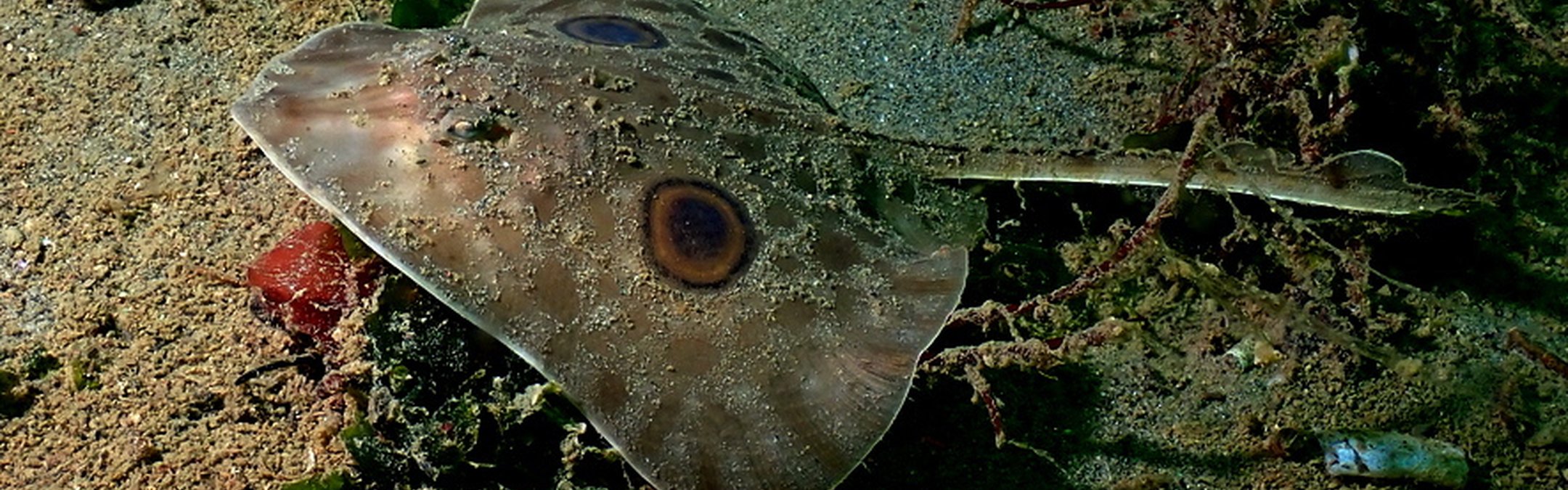
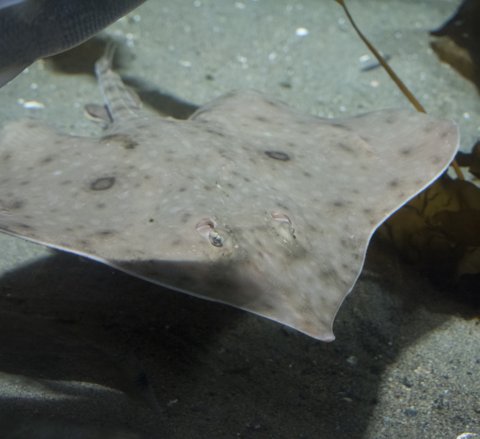
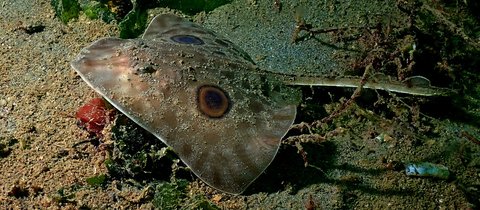
The big skate is the largest skate found in North America, with the maximum known length reaching 2.4 meters. Like all skates, it has a broad, diamond-shaped body, a long pointed snout and a slender tail. Its upper surface is typically mottled brown, grey or olive, helping it blend seamlessly into the seafloor when viewed from above. One of its most distinctive features is a pair of large dark "eyespots" on its wings, which scientists believe help confuse or deter predators. In contrast, its underside is pale in colour. Its eyes are positioned on top of the body, while the mouth and gill slits are located underneath.
At first glance, the big skate can easily be mistaken for a stingray. However, unlike many stingrays, it lacks a venomous tail spine. Instead, it has a thicker tail equipped with two small dorsal fins, a key feature that helps distinguish it from its ray-like relatives.
Where can they be found?
Northeastern Pacific Ocean, ranging from Alaska to Baja California
Did you know... Despite its name, the big skate is not the largest skate in the world. The flapper skate is, which lives around the British Isles. Some flapper skates can have a wingspan approaching 3 metres, making them wider than many cars are long.
Key facts
The big skate is a rather slow-moving bottom-dweller that spends most of its life gliding gracefully over sandy and muddy seabeds or resting motionless on the ocean floor. Thanks to its mottled colouration, it blends in remarkably well with its surroundings, making it difficult for both predators and prey to spot. Rather than actively chasing food, it often searches the seabed for crabs, shrimp, worms and small fish, sometimes pinning prey against the bottom with its broad body before eating it. It is generally calm and unaggressive and divers often encounter individuals lying still on the seabed, relying on their camouflage rather than fleeing from potential threats. Unlike many bony fish, skates lack a swim bladder, the gas-filled organ that helps fish control buoyancy. As a result, they naturally sink rather than float, allowing them to stay close to the seafloor for protection as well as for hunting.
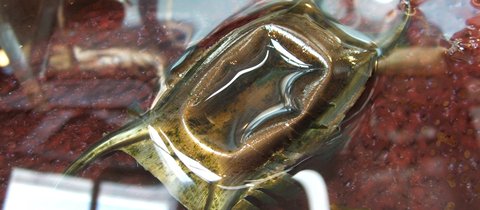
Most people might not recognise this giant Pacific skate, but will be able to point out its egg cases. It covers its eggs in a tough, leathery capsule which is commonly known as a "mermaid's purse". The spiky projections and weight of the eggs allows the skate to deposit them on sandy seabeds without getting washed away. When they hatch, these egg cases will often wash up on beaches. What is unusual for the big skate is that a single egg case can actually contain up to seven embryos, which is far more than the single egg most skate species lay in each casing.
Big skates grow incredibly slowly and take many years to reach breeding age. Males usually mature at around 7-8 years old, while females may not become sexually mature until they are 12-13 years old. This puts the survival of the species at high risk to threats such as overfishing and bycatch.
| Also known as | Giant Pacific skate |
|---|---|
| IUCN status | Least Concern |
| Diet | Big skates patrol the sea bed and feed on bottom-dwelling animals such as crabs, shrimp, worms, clams and small fish. |
| Length | This species of skate is capable of reaching a wingspan of around 2.4 meters however the majority of skates reach just under 2 metres. |
| Weight | The big skate can be quite heavy reaching over 90kg. However, most never reach this weight. On average they weigh up to 45kg. |
| Habitat | They typically live on sandy or muddy seabeds in bays, estuaries and coastal waters, usually in depths of less than 120 metres |
| Speed and distance | Big skates are slow moving. Rather than racing across the ocean, it takes its time, drifting over the seafloor, gently waving its wide wings to glide across the sand. It is believed that a single individual can still cover considerable distances during their lifetime, though they spend a lot of time resting in the seabed too. |
| Lifespan | They can reach up to 26 years old. |
Support our blue planet
The ocean is home to an extraordinary diversity of life, but it faces growing threats from climate change, human activity, habitat destruction and pollution. Your support helps fund vital science-based conservation, research, and restoration projects that make a real difference.