
Atlantic menhaden
Brevoortia tyrannus
IUCN Status:Least Concern
Don't let their size fool you, Atlantic menhaden are tiny fish with a huge impact on ocean ecosystems. These small, silvery swimmers are true ocean heroes, helping to keep coastal waters healthy while providing food for countless marine animals.
What do they look like?
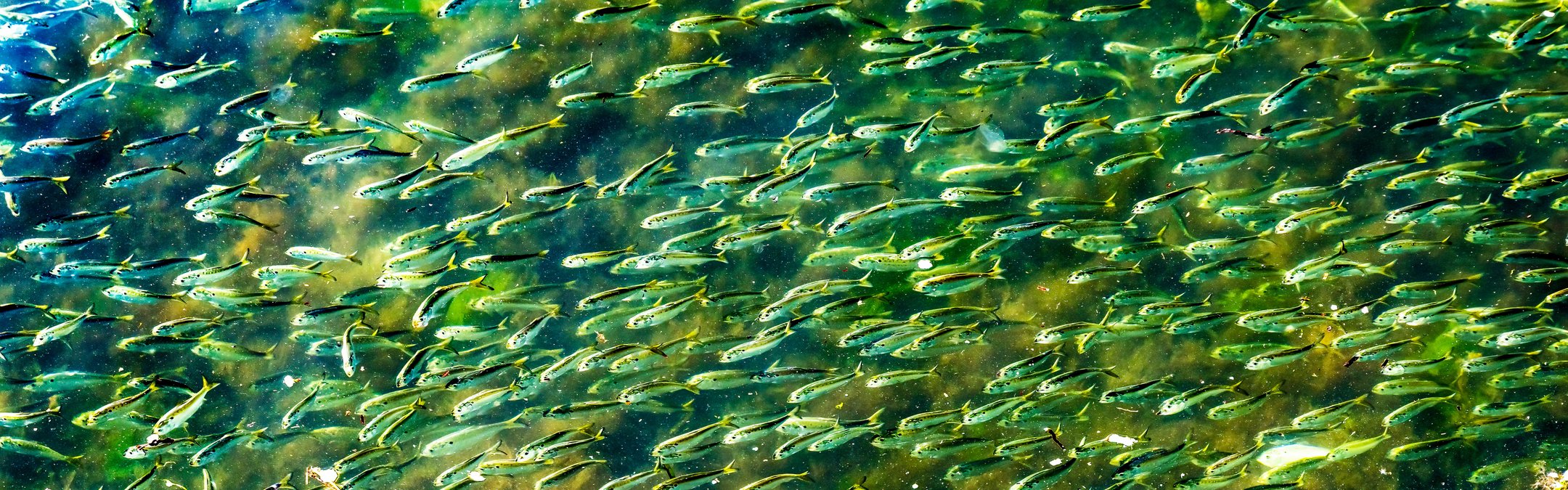
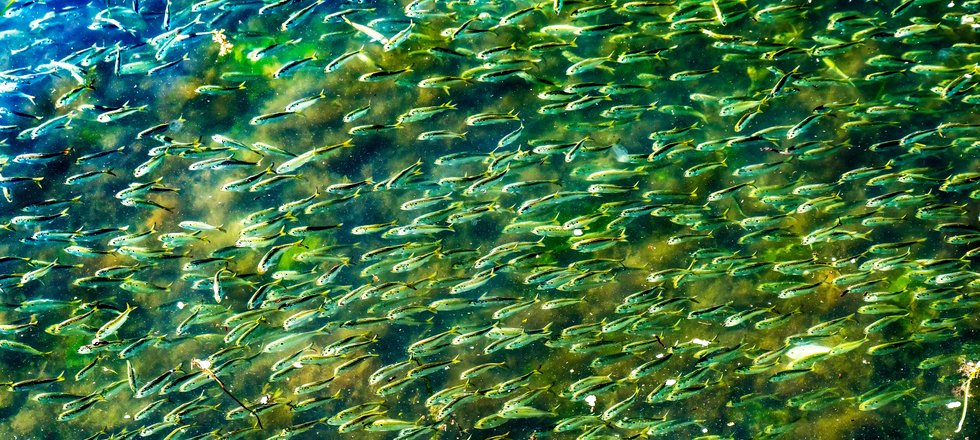
Atlantic menhaden are silvery streamlined fish with blue-green backs. Their highly reflective scales flash in the sunlight, and when thousands swim together near the surface, they can turn the water into a shimmering sea of silver. They also have a distinctive dark spot behind each gill cover which helps distinguish them from many similar-looking herring species.
Where can they be found?
Western Atlantic coast, along North America's coasts. Their range stretches from Nova Scotia in Canada right down to northern Florida. Thy often swim along shallow coastal waters and estuaries.
Did you know... Despite its intimidating scientific name, Brevoortia tyrannus, the Atlantic menhaden is no ocean tyrant. The name may evoke images of a Tyrannosaurus rex, but this fish is as gentle as they come, spending far more time fleeing predators than behaving like one!
Key facts
The Atlantic menhaden is a schooling fish, meaning it gathers in large, tightly packed groups. This behaviour helps reduce the risk of predation, conserves energy while swimming, and increases opportunities for reproduction. Menhaden are often seen near the ocean’s surface, where blooms of microscopic plants are photosynthesising in the sunlight. As thousands of fish move together through the water, their silvery scales reflect the sun, creating a shimmering, almost magical spectacle.
Despite travelling in large schools, Atlantic menhaden are a favourite food source for many predators such as bass, bluefin tuna and even some shark species. Fortunately, their populations usually remain abundant thanks to their remarkable reproductive capacity. A single female can produce over 300,000 eggs, helping the species withstand the heavy predation pressure it faces throughout its life.
Atlantic menhaden are described as one of the most important fish in the Atlantic because so many species rely on them as prey. A marine favourite, the humpback whale, will even move close to shore to feed on large schools of menhaden, creating fantastic whale-watching opportunities along America's east coast during the spring and summer months.
Their importance extends beyond the food web too. The name "menhaden" comes from an Algonquian word meaning something similar to "manure fish", a reference to how Native Americans used these fish to fertilise crops, placing them in planting mounds to feed corn. Long before scientists recognised their ecological value, people had already discovered that Atlantic menhaden played an important role in supporting life on land as well as in the sea.
| Also known as | Pogy/Pogie, Bunker fish, Munnawhatteaug |
|---|---|
| IUCN status | Least Concern |
| Age | Atlantic menhaden can live to be 10 to 12 years old but most of them only reach around 6. |
| Length | They can grow up to 50cms but are usually seen around 35cms. |
| Weight | Adult fish usually weigh around 1lb. |
| Diet | The Atlantic menhaden is a filter feeder. It mainly eats phytoplankton and zooplankton |
| Speed and distance | This fish migrates to deeper waters in the winter and shallower waters in the summer. |
Support our blue planet
The ocean is home to an extraordinary diversity of life, but it faces growing threats from climate change, human activity, habitat destruction and pollution. Your support helps fund vital science-based conservation, research, and restoration projects that make a real difference.